
Teenage years bring a lot of changes — and your skin is one of the first places where you may notice them. Suddenly, you may have oily skin, small bumps, blackheads, pimples or even dark spots that were never there before.
The good news? You don’t need a complicated 10-step skincare routine to take care of your skin.
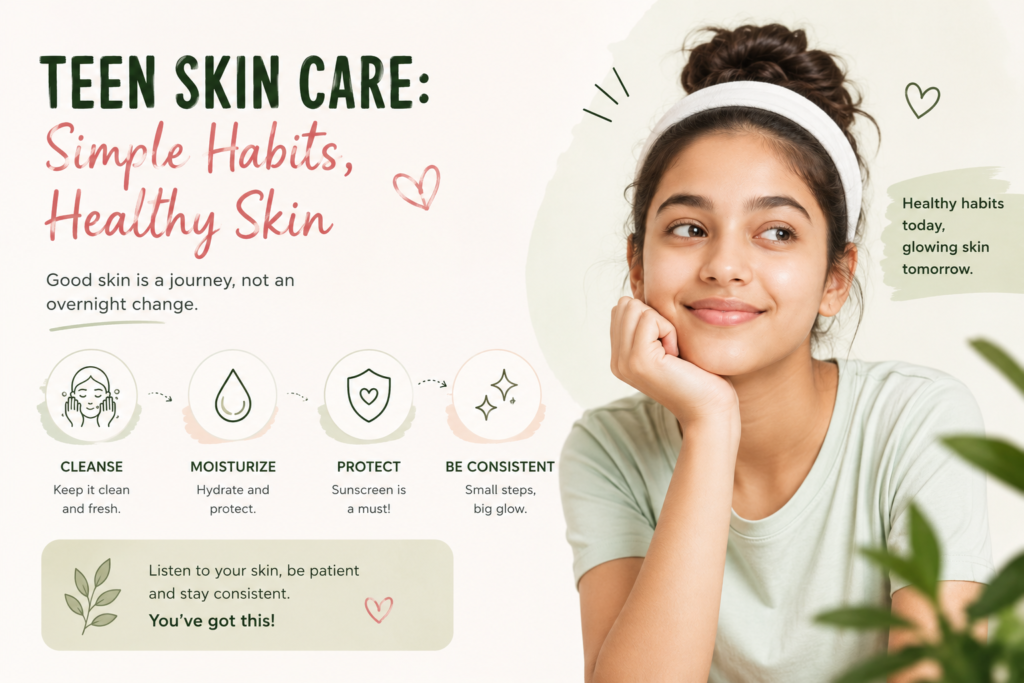
For most teenagers, the basics are simple: cleanse, moisturize, protect and be consistent.
Why Does Teen Skin Change?
During puberty, hormonal changes can make the skin produce more oil. Extra oil, dead skin cells and dirt can build up inside pores, which may contribute to blackheads, whiteheads and acne.
This doesn’t mean that having acne is a sign of “dirty skin.” In fact, washing your face too aggressively can irritate the skin and sometimes make things worse.
The goal isn’t to have perfectly flawless skin. The goal is to keep your skin clean, comfortable, balanced and healthy.
Start With a Simple Routine
A good teenage skincare routine doesn’t need dozens of products.
1. Cleanse Your Face Gently
Cleansing helps remove sweat, excess oil, dirt and daily buildup from the skin.
If your skin is oily or acne-prone, look for ingredients that are specifically useful for clogged pores.
Salicylic acid is one such ingredient. It is commonly used in acne-focused skincare because it can help exfoliate inside pores and remove excess buildup.
Sensorial’s Salicylic Acid Facewash contains salicylic and glycolic acids and is designed for oily and acne-prone skin.
For teenagers, however, more isn’t always better. Start gently and pay attention to how your skin feels. If a product causes persistent burning, excessive dryness or irritation, stop using it and consider asking a parent, pharmacist or dermatologist for advice.
2. Don’t Forget Moisturizer
A common mistake is thinking that oily or acne-prone skin doesn’t need moisturizer.
It does.
When your skin becomes too dry, it can feel tight and irritated. A lightweight moisturizer can help maintain the skin’s moisture barrier and keep the skin comfortable.
Look for ingredients such as hyaluronic acid and niacinamide, which are found in Sensorial’s Creamy Hydra Moisturizer. The formula also contains Aquaxyl and oat extract for hydration and skin care.
The important thing is to choose a moisturizer that feels comfortable on your skin rather than applying a heavy layer.
3. Be Careful With Acne
Getting a pimple before a school event or an important day can feel frustrating. But try not to pick or squeeze it.
Picking at acne can irritate the skin and may leave marks behind.
Instead, focus on a consistent routine and give your skincare products enough time to work.
For acne-prone skin, salicylic acid and niacinamide are two ingredients commonly used in skincare.
Sensorial’s Acne & Dark Spot Control Serum combines 2% salicylic acid and 1% niacinamide and is formulated specifically for active acne and acne-related dark spots.
If your acne is painful, severe, spreading or not improving, skincare products may not be enough. A dermatologist can help you find the right treatment.
What About Dark Spots?
Sometimes the pimple disappears, but the mark it leaves behind seems to stay forever.
This is why ingredients such as niacinamide and vitamin C are popular in skincare. They can be used in routines designed to improve the appearance of uneven skin tone and dull-looking skin.
Sensorial’s Vitamin C Brightening Facewash contains Vitamin C, niacinamide and glutathione, along with fermented rice water and calendula. It is formulated for normal to combination skin and is intended to help with dullness and the appearance of dark spots.
The key is patience. Skin doesn’t change overnight, so avoid constantly switching products because you don’t see instant results.
Sunscreen Is Not Optional
One of the most useful skincare habits you can develop as a teenager is using sunscreen during the day.
UV exposure can contribute to sunburn, premature skin aging and worsening of the appearance of pigmentation and dark spots.
Choose a broad-spectrum sunscreen that feels comfortable enough for you to use regularly. Apply it as directed on the product label, especially when you are spending time outdoors.
And remember: a good skincare routine is not complete just because you have a cleanser and serum. Sun protection matters too.
You Don’t Need Every Trending Product
Social media can make skincare look complicated.
One person is using five serums. Another has a shelf full of masks. Someone else is recommending a new “miracle” ingredient every week.
You don’t need to copy every routine you see online.
For most teenagers, a basic routine can be enough:
Morning
- Gentle cleanser
- Moisturizer
- Sunscreen
Evening
- Cleanser
- One suitable treatment, if needed
- Moisturizer
Keep it simple and introduce new products one at a time.
A Few Skincare Habits That Really Matter
Your products are only one part of the picture. Everyday habits matter too.
Don’t scrub your face aggressively.
Your skin doesn’t need to be scrubbed until it feels “squeaky clean.”
Don’t pick your pimples.
Hands can introduce more dirt and bacteria, while squeezing can increase irritation.
Remove makeup before sleeping.
Let your skin stay clean overnight.
Keep your pillowcase and phone clean.
Both come into frequent contact with your face.
Don’t share skincare or makeup products.
Everyone’s skin is different, and sharing products isn’t a good skincare habit.
Give products time.
Changing your routine every few days makes it difficult to know what is actually helping your skin.
Listen to Your Skin
Skincare isn’t about following a routine perfectly.
If your skin feels comfortable, your routine is probably working reasonably well. If you experience constant redness, burning, itching, peeling or significant irritation, it’s a sign to stop and reassess what you’re using.
And if acne is affecting your confidence or becoming difficult to manage, there’s nothing embarrassing about asking a dermatologist for help.
The Bottom Line
Teenage skin doesn’t need to be perfect — it needs to be cared for.
Start with the basics: cleanse gently, moisturize, use sunscreen and choose targeted ingredients when you actually need them.
Ingredients such as salicylic acid, niacinamide and vitamin C can have a place in a skincare routine, but the best routine is the one that suits your skin and that you can follow consistently.
Don’t chase perfect skin.
Build healthy skin habits instead.
This article is intended for general skincare education and is not a substitute for professional medical advice. If you have persistent, painful or severe acne or significant skin irritation, speak with a qualified dermatologist.